Cortex University
By hackers, for hackers.
Veritas · Ingenium · Progressus
A first-principles institute for the theory and craft of artificial intelligence — where every system is built from the ground up, understood before it is abstracted.
Lynx Cortex is the learning portal of Cortex University. Its curriculum advances from numerical foundations to complete AI systems across a sequence of phases, each closed by honest assessment. Credentials issued here are cryptographically signed and independently verifiable.
- Veritas
- Truth — results are measured, never asserted; marks are computed from real work.
- Ingenium
- Ingenuity — understanding is earned by building each piece by hand before reaching for a framework.
- Progressus
- Progress — a steady path through the phases, one well-grounded step at a time.
Meet the founder — Borja Tarraso →
Heraldry & honors
Every Cortex credential carries the marks of its rank: a discipline crest for the degree, a metal for the tier, and stars or gems for the grade earned.
 Primary
 Academic
 Science
 Technology
 Global
One mark — Merit · two — Distinction · three — Highest Distinction. Read the full guide
The Founder

Founder & Chief
Borja Tarraso
By hackers, for hackers.
Principal Product Security Engineer · Red Hat Product Security
Passionate about how things work internally — and about security, the discipline that forces you to understand everything at once.
The Ethos
I have always been passionate about new technologies — but especially about how things work internally, the part almost everyone misses. And above all the security part, because security forces you to hold deep knowledge across many areas at once: to be a good technology guru you need programming, systems, networking, hardware — the low level. The passion for security is what lets you get past complex protection systems.
It is a bit passion and a bit ego — but the ego is only about improving yourself: knowing you beat a difficult milestone, which makes you smarter, or at least feel smarter. In the end we are not crackers — we do not break things for the sake of breaking them — and we are not mafias who extort. We are just passionate.
For a long time the line between passion and what was legal was very thin. But the ethics were always there for most of us — myself included — and we never harmed anyone, even on the blackhat side. Most of us became professionals: now we protect systems, even if we keep the nostalgia of the underground world — hacking back when there wasn't even jurisprudence, a legal limbo. Maybe we are greyhats: whenever something is unethical, or our knowledge can beat the bad guys and the mafias, we are always on the good side — at least we try. Ironically, I work for Red Hat — and in Security, of course.
Cortex University exists to pass that way of learning on: build everything from first principles, understand each system before abstracting it, and measure what you know instead of asserting it.
The Early Journey
-
1987
An Amstrad PC1512, at age five
I started on an old Amstrad PC1512, black and white, with no hard drive — my father bought one of just 19 MB — and the big floppy disks that tended to fail. No internet. On vacations I took my notes and programmed with pen and paper, so that when I came back I could dump everything into the computer.
-
1991–1992
The command line
At nine or ten I moved to the CLI: MS-DOS, programming in QBasic.
-
1993
The first virus, at eleven
My first virus: one that auto-loaded in the boot system. Then I moved to DEBUG and assembler, where I recoded an existing boot virus.
-
1994–1998
From the 286DX to the Pentium II
A 286DX with Turbo at 40 MHz, where I developed much more; and around 1998 a Pentium II at 350 MHz with 128 MB of RAM — a lot for the time. That is the machine in the photo of my room, where I was studying hacking (~2000–2001).
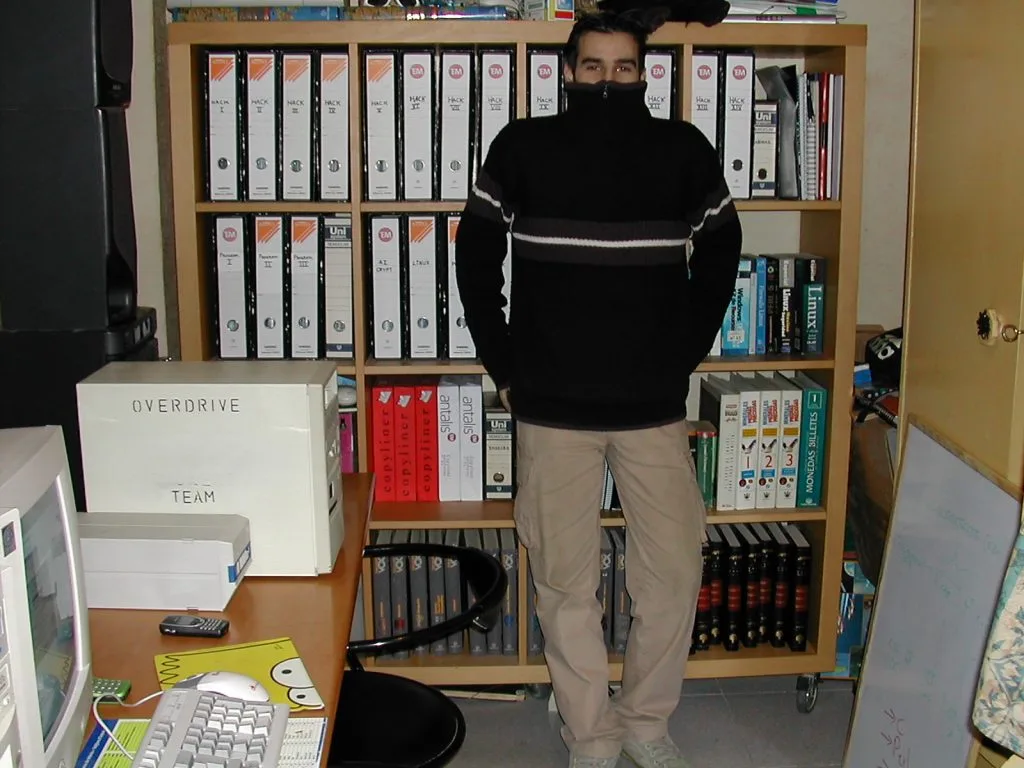
In my room with the Pentium II 350 MHz, studying hacking (~2000–2001). -
late 1990s
Phreaking
Phreaking to pay for my calls — internet connections were very expensive back then — and I mastered that part: the programming, the networking and the security, both the phone (phreaking) and the hacking sides.
-
2003
Wardriving
Wardriving with hacker colleagues, mapping wireless networks.
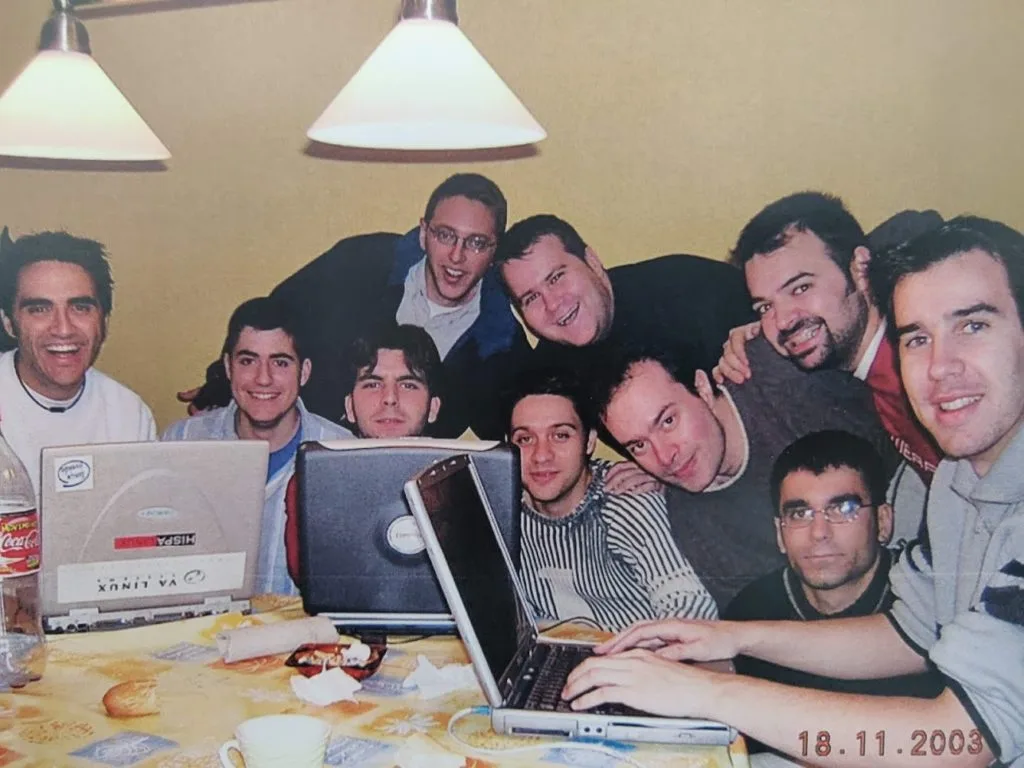
Wardriving with my hacker colleagues (2003).
Education
BSc (Hons) in Computing
Northumbria University — Newcastle upon Tyne, England (United Kingdom)
BSc thesis: “Tuple Spaces with the use of Intelligent Agents over an insecure medium”.
MSc in Advanced Networking
Finland
Covered the full CCNA and CCNP programs, and studied parts of the CCIE for some time. MSc thesis: “Improving the Ericsson Cloud Security”.
Professional Career
-
2001
Sodawave — Spain
Internship at an incubator-projects company, mentored by Xavier Gost. Early web and programming work (PHP, Perl and so on).
-
2005
ITS — Spain
Unix System Administrator, while studying.
-
2007–2009
Cisco Systems — Edinburgh, Scotland (UK)
I moved to Edinburgh at 25. Software Engineer on the CEF (Cisco Express Forwarding) optimization team, fixing bugs in IOS code. Almost three years.
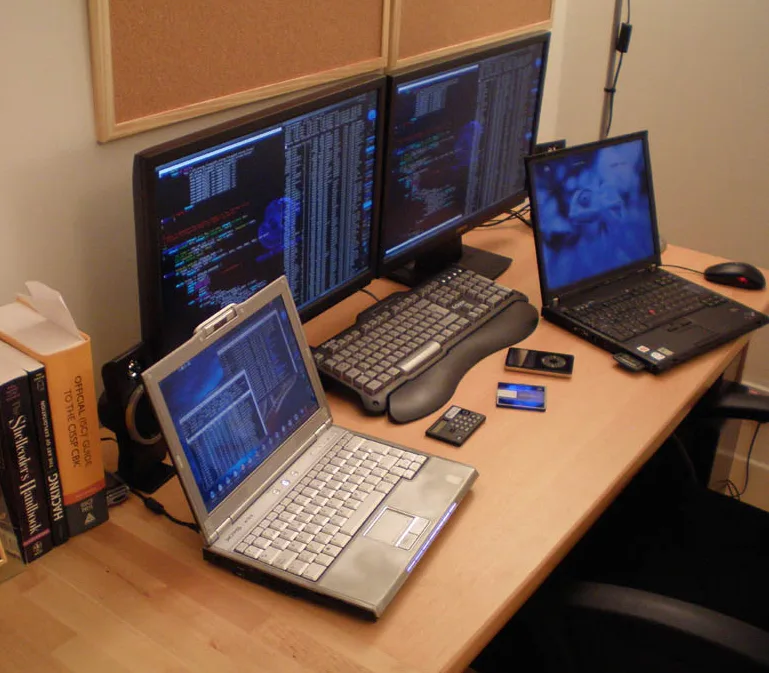
My work area at Cisco Systems. -
2011–2012
Nokia — Helsinki, Finland
Software Engineer on N9 development at the NRC (Nokia Research Center), MSSF team (Mobile Simplified Security Framework).
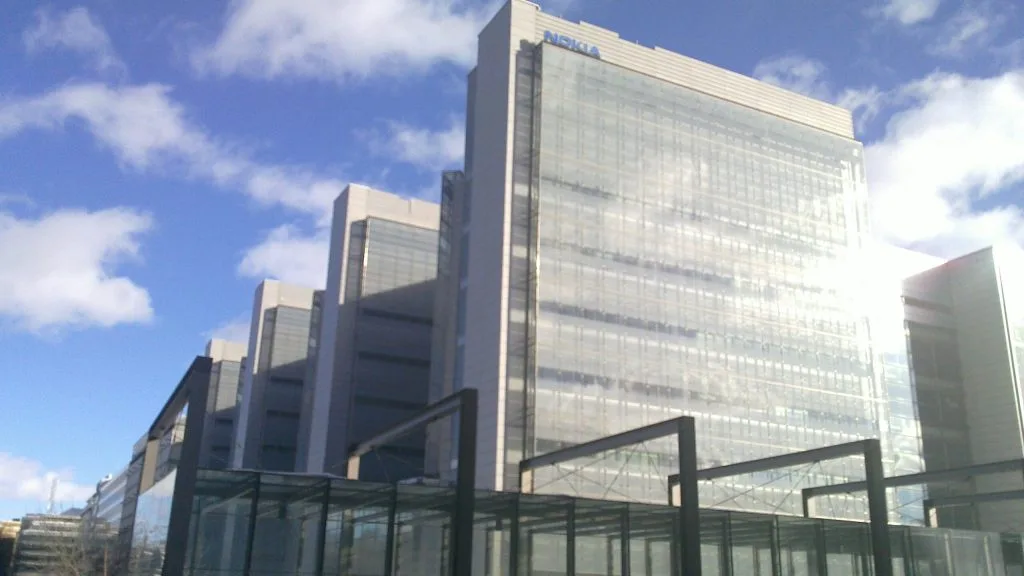
The NRC (Nokia Research Center). 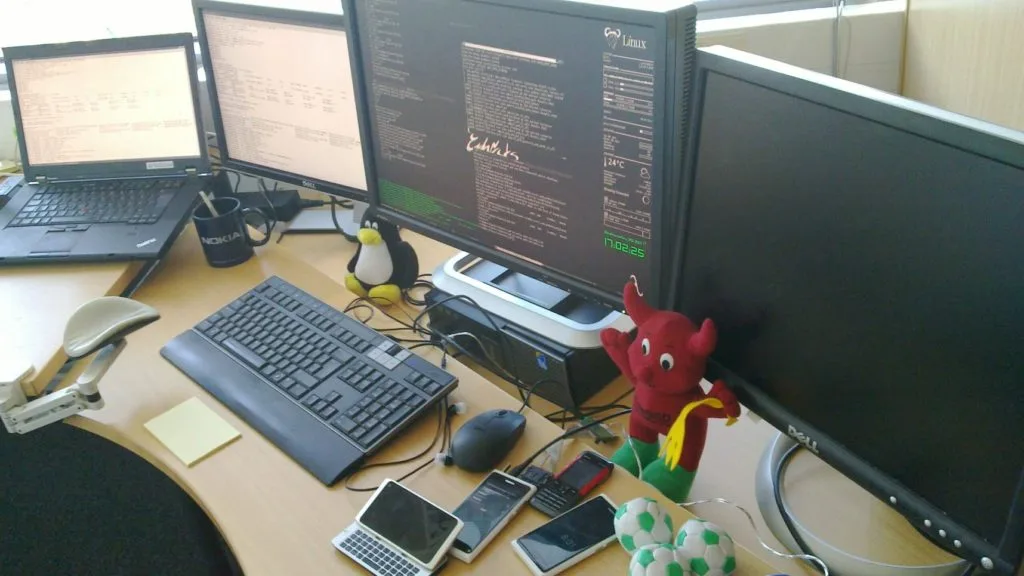
The NRC during my time at Nokia. -
2012
Nokia Siemens Networks (NSN) — Finland
Security Specialist. The SWIP internal project (Software Integrity Protection): cryptographic certificates, digital signatures, virus heuristics, and HSMs (Hardware Security Modules), in coordination with Nets corp.
-
2012–2017
Ericsson — Jorvas High Technology Centre, Kirkkonummi, Finland
Five years within Ericsson Network Security (ENS), across three chapters:
- 2012–2014 — Software Engineer, IP RAN Transmissions R&D unit; LTE termination integration in the IP Routing team.
- 2014–2015 — ECS (Ericsson Cloud Security), Network Security Unit.
- 2015–2017 — ECAS (Ericsson Certificate Administration Server), the PKI module of the first eSIM implementation solution worldwide. Built with RabbitMQ, Erlang, Puppet configuration management and more; a complex solution offering HA with geo-redundancy (Corosync + Pacemaker), full autobuild, and automatic deployment and provisioning with Ansible.
-
2017–present
Red Hat — Product Security
PSIRT reactive team. Senior Product Security Engineer (2017–2021), and since October 2021 Principal Product Security Engineer: an analyst role — finding, analyzing and validating new zero-days and CVEs as a root authority.
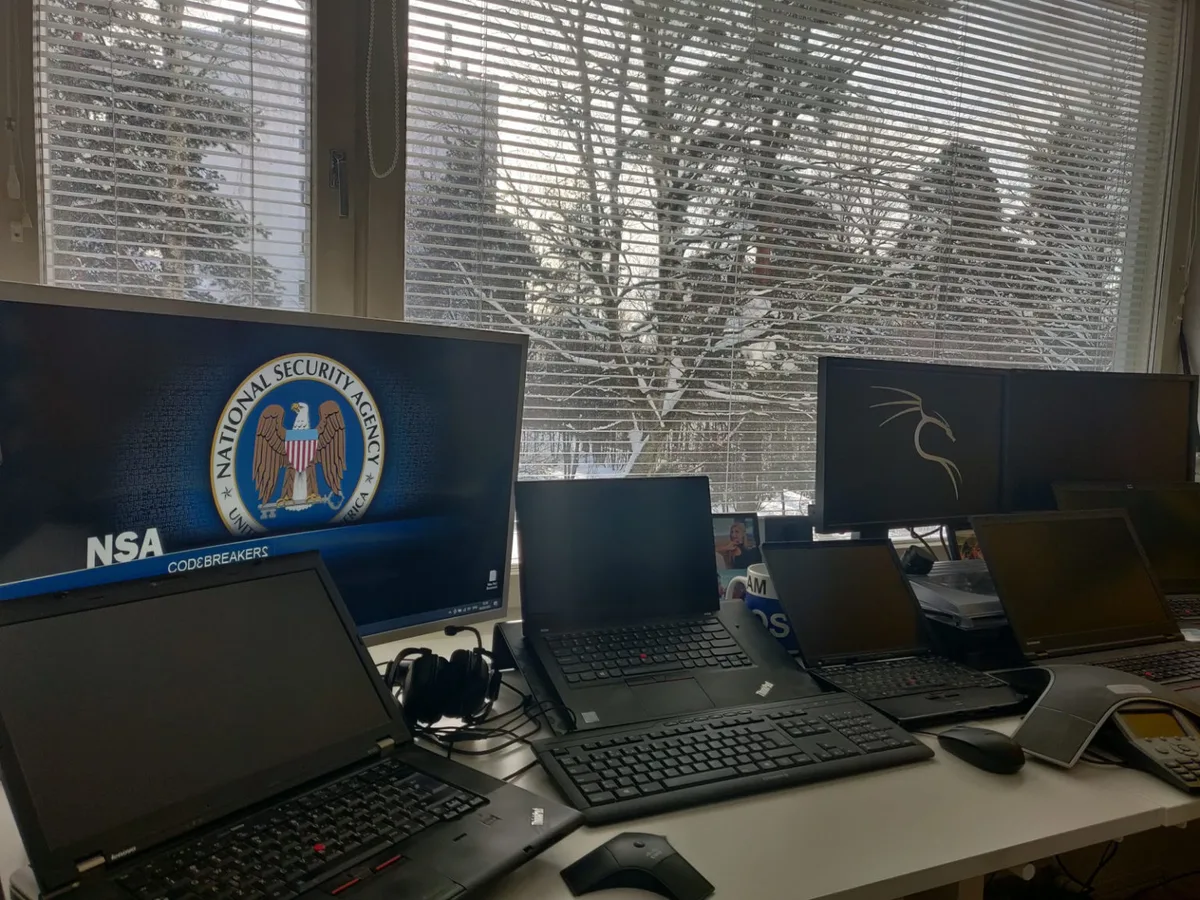
My home work environment at Red Hat.
Service, Affiliations & Projects
-
2010
Free Software Foundation
FSF member since April 2010.
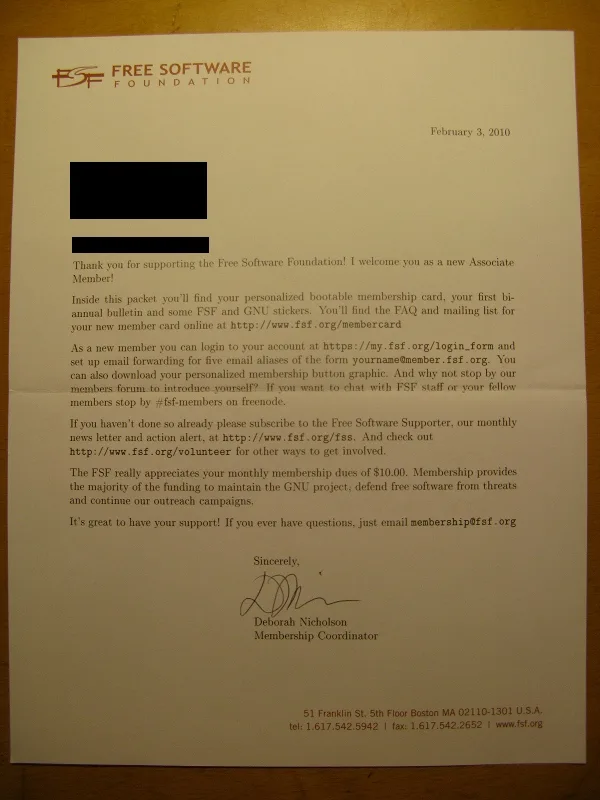
Free Software Foundation membership letter (2010). -
2012–2014
Aalto-1 — the first Finnish satellite
Associated with Aalto University: a 4 kg, three-cube CubeSat-standard nanosatellite — the first Finnish satellite launched to space. I worked on the communication protocol: the L2 internal comms using RUDP.
-
2016–2017
ETC delegate — United Nations OCHA
ETC (Emergency Telecommunications Cluster) delegate with United Nations OCHA. Deployed to high-risk / war countries: GSM containers, radio connectivity infrastructure and satellite Internet connectivity from scratch, registering in the NOC (Network Operations Center) to help humanitarian relief with communications.
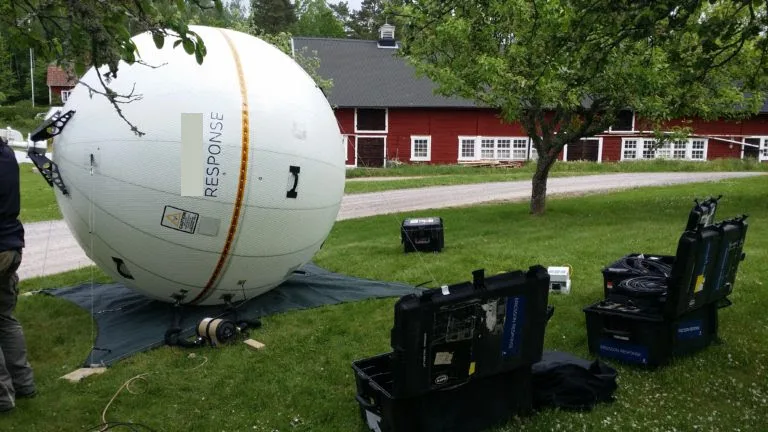
ETC/UN — setting up Internet over satellite from scratch in high-risk countries. 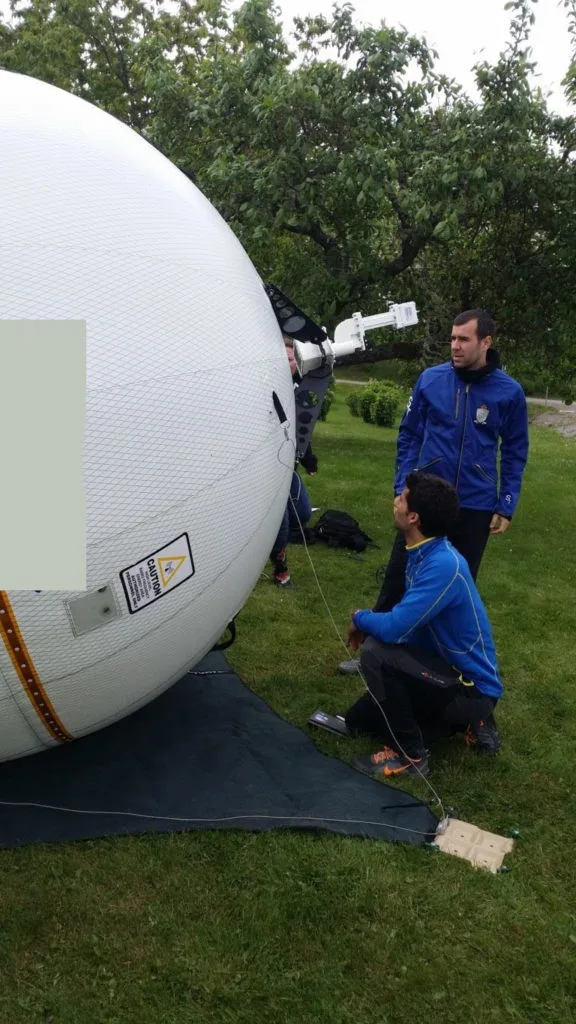
ETC/UN — satellite connectivity during deployments.
Research & Specialisation
Research
- Satellite communication protocols.
- Privacy and protocol implementation internals in the Deepweb / Darkweb / Darknet — TOR (The Onion Router) and I2P.
- TEMPEST (CRT emanation) research, SELinux and other technologies from the NSA (National Security Agency), tested and tracked over the years.
Craft: Systems, Tools & Languages
- Operating systems — mainly Slackware, Gentoo, Debian and Arch Linux. Also OpenBSD, and QNX (for ION: IOS on Neutrino as an RTOS), as well as Inferno, Plan 9 and OpenVMS.
- Editor — Emacs, mastered after seven years of VIM. Recently developed GEOS, the GNU/Emacs Operating System, with full GNU/Hurd support.
- Languages — QBasic, WLogo, XHTML, CSS, VB, Bash, sed & awk, x86/MIPS/PPC assembly, C, C++, Perl, Python, Java, Ruby, Erlang, Scheme, LISP, Haskell — and more recently focused on Go.
Open sourceMIT
The Cortex portal software is free and open-source, released under the MIT License — you may use, study, modify, and share it, provided the copyright and permission notice travel with every copy.
MIT License at the Open Source Initiative · © 2026 Borja Tarraso
The heraldic artwork, emblems, and curriculum content are © Cortex University and are not covered by the software license.
Read the full license text
MIT License

Copyright (c) 2026 Borja Tarraso

Permission is hereby granted, free of charge, to any person obtaining a copy
of this software and associated documentation files (the "Software"), to deal
in the Software without restriction, including without limitation the rights
to use, copy, modify, merge, publish, distribute, sublicense, and/or sell
copies of the Software, and to permit persons to whom the Software is
furnished to do so, subject to the following conditions:

The above copyright notice and this permission notice shall be included in all
copies or substantial portions of the Software.

THE SOFTWARE IS PROVIDED "AS IS", WITHOUT WARRANTY OF ANY KIND, EXPRESS OR
IMPLIED, INCLUDING BUT NOT LIMITED TO THE WARRANTIES OF MERCHANTABILITY,
FITNESS FOR A PARTICULAR PURPOSE AND NONINFRINGEMENT. IN NO EVENT SHALL THE
AUTHORS OR COPYRIGHT HOLDERS BE LIABLE FOR ANY CLAIM, DAMAGES OR OTHER
LIABILITY, WHETHER IN AN ACTION OF CONTRACT, TORT OR OTHERWISE, ARISING FROM,
OUT OF OR IN CONNECTION WITH THE SOFTWARE OR THE USE OR OTHER DEALINGS IN THE
SOFTWARE.