The Cortex University Guide
One page for the whole system: the level ladder, how marks work and the qualities they assess, heralds & badges, the honorary crests, how to read a Cortex ID, and how verification works.
The natural path — Level 0 to Level 10
The full journey: Prerequisite → Enrolled → M.Sc → Ph.D → PD·Fellow → PD·Habilitation → PD·Chair → Apex Ω → Top Laureate → Delta Δ → Special. Each step shows its generic length, its prerequisite, and where admission or acceptance happens; the Delta level iterates yearly over the Apex and ten consecutive years reach Special.
Level 9 — Delta (Δ) — sits above the Apex as a yearly loop: each year from the second onward, a short keep-current iteration (4 weeks to 3 months) refreshes the Apex with the newest technologies; the year count shows as N1–N9, and ten consecutive years reach Level 10 (Special).
| Level | Generic length | Prerequisite | Admission / acceptance |
|---|---|---|---|
| Level 0 · Prerequisite | Self-paced | None — BSc-level background is recommended reading, never enforced. | Informational only — no admission, no enrolment. |
| Level 1 · Enrolled | Until your first program completes | Level 0 background (recommended). | Verified account + admissions-committee approval — every active student holds this level until a first program is finished. |
| Level 2 · M.Sc | 42 weeks · 42 phases | Enrolled standing (Level 1). | Committee approval into the taught master's. |
| Level 3 · Ph.D | 56 weeks · 56 phases | The discipline's M.Sc (Level 2). | Admissions-committee approval into the doctoral track. |
| Level 4 · PD·Fellow | 28 weeks · 7 portfolio modules | The Ph.D (Level 3). | Committee acceptance into the post-doctoral stage. |
| Level 5 · PD·Habilitation | 24 weeks · 6 portfolio modules | PD·Fellow (Level 4). | Committee acceptance. |
| Level 6 · PD·Chair | 24 weeks · 6 portfolio modules | PD·Habilitation (Level 5). | Committee acceptance. |
| Level 7 · Apex · Ω | Conferred by recognition — no taught term | PD·Chair standing (Level 6). | By recognition — the reserved apex seat, not coursework. |
| Level 8 · Top Laureate | Conferred standing — no taught term | Apex Ω (Level 7). | Supreme-Honorary recognition — the Top Laureate crest. |
| Level 9 · Delta · Δ | Variable — 4 weeks to 3 months | Top Laureate (Level 8). | Yearly iteration over the Apex, published from the second year onward; the year count shows as N1–N9 — not yet offered. |
| Level 10 · Special | Ten consecutive Delta years | Delta (Level 9), sustained every year. | Automatic on the tenth consecutive Delta year — held for life. |
Cortex Credits (CC)
Cortex Credits (CC) are the university's own unit for a programme's course-worth — how much taught work a credential represents. The rate is uniform across every discipline: one MSc phase is 3 CC and one PhD phase is 5 CC, so a full master's is 126 CC and a full doctorate 280 CC. Post-doctoral portfolio modules and other tracks charge the fixed rates below. (This is the programme's weight — distinct from the Cortex Credits a student earns as XP while progressing.)
| Unit | Rate | Example |
|---|---|---|
| MSc phase | 3 CC | 42 phases → 126 CC per master's |
| PhD phase | 5 CC | 56 phases → 280 CC per doctorate |
| Post-doc · Fellow module | 6 CC | 7 modules → 42 CC |
| Post-doc · Habilitation module | 7 CC | 6 modules → 42 CC |
| Post-doc · Chair module | 8 CC | 6 modules → 48 CC |
| Apex (Ω) seat | 9 CC | 1 seat → 9 CC · full F/H/C/Ω = 141 CC |
| Bootcamp week | 1 CC | e.g. a 4-week bootcamp → 4 CC |
| Signals unit (reading-only) | 2 CC | 49 units → 98 CC |
Supreme-honorary top-ups (one-off, on top)
| Level | Rate |
|---|---|
| Top Laureate (L8) | +10 CC |
| Delta (L9) | +15 CC |
| Special (L10) | +20 CC |
Cortex University is not externally accredited (no ECTS, no national/ministerial recognition), so it denominates course-worth in its own transparent unit rather than borrowing one it cannot officially issue. A single published rate table keeps every programme's weight legible and comparable, and gives a clean basis for the future conversion and transfer agreements that could map CC onto external credit systems.
Marks explained
Every mark is a band × a tier metal. The bands are Merit, Distinction and Highest (one, two or three gems); the metals climb bronze → silver → gold → ruby → diamond with the credential rung. No speed, time or volume ever affects a mark.
| Tier | FAIL | PASS | MERIT | DISTINCTION | MAGNA CUM LAUDE |
|---|---|---|---|---|---|
| Bronze | FAIL | PASS | |||
| Silver | FAIL | PASS | |||
| Gold | FAIL | PASS | |||
| Ruby | FAIL | PASS | |||
| Diamond | FAIL | PASS |


Attributes of Excellence
Seven qualities every credential is assessed against.
-

Intellect
Depth and rigor of understanding — derivations from first principles, not memorized recipes.
-

Innovation
Original approaches and creative problem-solving beyond the taught material.
-

Technical Mastery
Command of the craft — implementations that are correct, idiomatic and verified end to end.
-

Research Impact
Contributions that advance the field — reproducible results others can build on.
-

Leadership
Direction of independent work — framing problems, setting standards and guiding a line of research.
-

Integrity
Honest evidence, honest marks — every claim verifiable, every credential derived, never hand-set.
-

Global Perspective
Breadth across systems, languages and disciplines — connecting the field to the wider landscape.
Heralds, one by one
Classic heralds are conferred on official documents — the title emblem beside a profile. Every herald, what it is, and when it is earned:
Role heralds
-

Student
The learner default — carried by every enrolled student until an earned academic herald outranks it.
-

Professor
Borne by teaching staff on official documents; a staff identity, not an earned credential.
-

Admin
The administration's herald — operational stewardship of the portal.
-

CEO / Founder
The founder's herald, reserved for the institution's owner.
Ph.D discipline heralds (silver)
-

Ph.D — Artificial Intelligence
Conferred with the AI doctorate.
-

Ph.D — Cryptography
Conferred with the cryptography doctorate.
-

Ph.D — Security
Conferred with the security doctorate.
-

Ph.D — Networking
Conferred with the networking doctorate.
-

Ph.D — Software
Conferred with the software-family doctorates (software, algorithms, craft, databases).
-

Ph.D — Python
Conferred with the Python doctorate.
-

Ph.D — Hardware
Conferred with the computer-architecture doctorate.
-

Ph.D — Automation
Conferred with the automation doctorate.
Post-doctoral hierarchy (gold)
-

Socius — PD·Fellow (Level 4)
Earned on completing the Fellow portfolio — the first post-doctoral stage.
-

Habilitatus — PD·Habilitation (Level 5)
Earned with the Habilitation — a body of work qualifying the holder to direct independent research.
-

Ordinarius — PD·Chair (Level 6)
Earned with the Chair — standing leadership of a discipline.
-

Praesidii — Apex Ω (Level 7)
The reserved apex seat — conferred by recognition, not coursework.
Honorary crests
-

Whitehat
The defensive-security doctorate's crest (its classic silver herald is not cut).
-
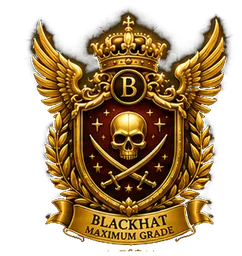
Blackhat
The offensive-security doctorate's crest — CTF-style, detection-first study.
-

Hacker
Honorary recognition of exceptional offensive-defensive craft across the security family.
Badges, one by one
Modern badges live on the profile badge wall: discipline badges mark your field, stage badges your credential depth, role badges your standing. Unearned badges show as locked silhouettes — the same art, never a different file.
Discipline badges (MSc + Ph.D registers)
-

Artificial Intelligence
Earned with the AI master's; the doctoral register confers its Ph.D variant.
-

Cryptography
Earned with the cryptography master's; Ph.D variant on the doctoral register.
-

Security
Earned with the security master's; Ph.D variant on the doctoral register.
-

Networking
Earned with the networking master's; Ph.D variant on the doctoral register.
-

Software
The software-family badge — also worn by the algorithms, craft and database programs until their own art is cut.
-

Python
Earned with the Python master's; Ph.D variant on the doctoral register.
-

Hardware
Earned with the hardware master's; Ph.D variant on the doctoral register.
-

Automation
Earned with the automation master's; Ph.D variant on the doctoral register.
-

Whitehat
Earned with the defensive-security master's; Ph.D variant on the doctoral register.
-

Blackhat
Earned with the offensive-security master's; Ph.D variant on the doctoral register.
Post-doctoral stage badges
-

PD·Fellow (Level 4)
Earned on completing the Fellow portfolio (7 modules).
-

PD·Habilitation (Level 5)
Earned on completing the Habilitation portfolio (6 modules).
-

PD·Chair (Level 6)
Earned on completing the Chair portfolio (6 modules).
Apex badges
-

Grand Master (Ω)
The modern badge form of the Higher-Honorary Grand Master crest (see the Higher Honorary section).
-

Top Laureate (Ω)
The modern badge form of the Supreme-Honorary Top Laureate crest, Levels 8–10 (see the Supreme Honorary section).
Role badges
-

Student
Every enrolled learner's badge (test and read-only accounts share it).
-

Professor
Teaching-staff identity badge.
-

Admin
Portal-administration identity badge.
-

CEO / Founder
The owner's identity badge.
Higher Honorary
A distinct honorary section with exactly one member: the Grand Master crest.
-
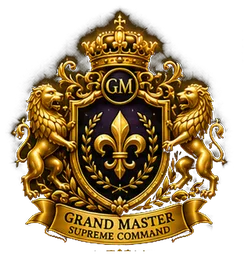
Grand Master
Earned by completing every canonical program — the epithet is appended to the ceremonial title, never replacing it.
Supreme Honorary
The pinnacle honorary section — each rung carries its OWN coat of arms, grander than the one below it: the Top Laureate seat (Level 8), the Delta Seat (Level 9) and the Special Honorific Seat (Level 10). Level 9's N-count is the number of yearly Delta updates completed (N1–N9), capping into Level 10 at year ten.
-

Level 8 · Top Laureate
Top Laureate
-

Level 9 · Delta · Δ
Delta Seat
-

Level 10 · Special
Special Honorific Seat
| Level | Meaning |
|---|---|
| Level 8 · Top Laureate | Conferred by Supreme-Honorary recognition over the Apex — the crest carries the Δ sign. |
| Level 9 · Delta · Δ | A Top Laureate who has completed the yearly Delta update for at least one year. The year count shows as N1–N9 — one step per completed Delta year, through year nine. |
| Level 10 · Special | The ultimate level: the Delta update completed ten years in a row. The N-count caps into Special at year ten — permanent, held for life. |
How to read a Cortex ID
Discipline acronyms
| Symbol | Meaning |
|---|---|
| AI | Artificial Intelligence |
| CRY | Cryptography |
| SEC | Computer Security |
| NET | Networking |
| SWE | Software Engineering |
| PY | Python Programming |
| HW | Hardware & Computer Architecture |
| AUT | Automation |
| WH | Whitehat Defensive Security |
| BH | Blackhat Offensive Security |
| ALG | Algorithms & Data Structures |
| CRF | Software Craftsmanship |
| DB | Databases & Data Systems |
Tier / level acronyms
| Symbol | Level | Meaning |
|---|---|---|
| MSc | L2 | Master of Science in a discipline |
| PhD | L3 | Doctorate in a discipline |
| PD·F | L4 | Post-Doc · Fellow |
| PD·H | L5 | Post-Doc · Habilitation |
| PD·C | L6 | Post-Doc · Chair |
| Ω | L7 | Apex seat (reserved) |
| Δ | L9 | Delta — the yearly keep-current iteration over the Apex (years N1–N9) |
Verification & transparency
Every credential carries a QR + an ID hash + a short code; anyone can confirm it at /verify. Credentials are derived from verified evidence, never hand-set.
The PhD is an internal Cortex University credential, NOT externally accredited (no ECTS, no national/ministerial recognition). It certifies verified knowledge + an original verified contribution. This must be stated plainly wherever the credential appears. We optimize for knowledge quality, not title-holding.